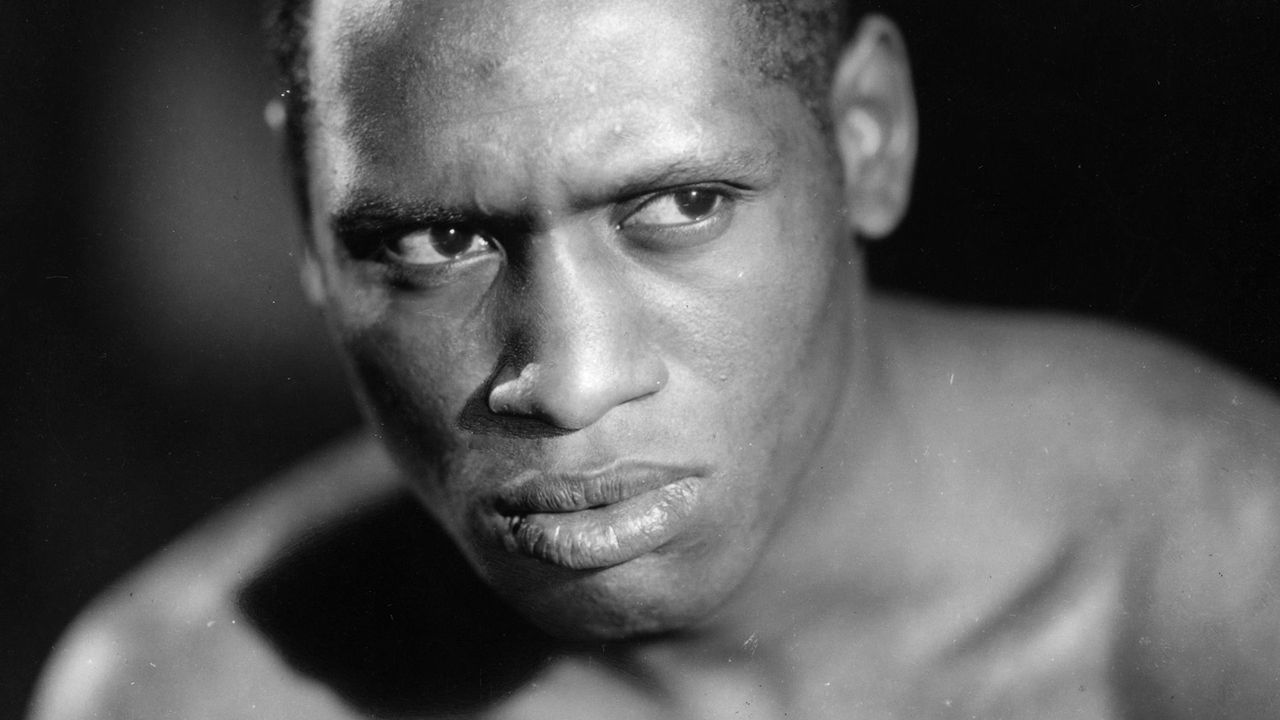
The topic centers on Paul Robeson, the extraordinary multi-talented figure—singer, actor, athlete, scholar, and activist—who was once hailed as the most famous Black person in America. In the late 1930s and early 1940s, his recording and performance of “Ballad for Americans” skyrocketed his popularity, making him a national symbol of unity and pride. Yet by the 1950s, during the height of the Red Scare and McCarthyism, relentless anti-communist persecution turned him into a pariah. His passport was revoked, concerts canceled, media appearances banned, and his name scrubbed from public memory. This erasure wasn’t accidental; it was a deliberate campaign fueled by his outspoken criticism of racism, support for labor rights, and refusal to condemn the Soviet Union amid Cold War hysteria. The story is a stark reminder of how fear can weaponize patriotism to silence dissent, especially when that voice belongs to a Black man challenging the status quo.
I first encountered Robeson’s name years ago while digging into old jazz records and civil rights history. His deep bass-baritone voice on “Ol’ Man River” hit me hard—raw power mixed with sorrow. Learning how he went from beloved icon to forgotten figure felt like uncovering a hidden chapter in American history that no textbook ever mentioned. It’s frustrating, almost infuriating, because his contributions were massive, yet the system worked overtime to make him disappear. Let’s walk through who he was, how he rose, and why the 1950s crushed him so completely.
Who Was Paul Robeson?
Paul Robeson was born in 1898 in Princeton, New Jersey, the son of an escaped slave turned minister. From an early age, he showed genius-level intellect and athletic prowess.
He became the first Black student to attend Rutgers University on scholarship, graduating as valedictorian while earning 15 varsity letters in sports. He played professional football briefly, then pivoted to law at Columbia University. But the stage called louder. By the 1920s, he was starring in groundbreaking plays like Eugene O’Neill’s “The Emperor Jones” and Shakespeare’s “Othello,” becoming the first Black actor to play the Moor on Broadway to wide acclaim.
His singing career exploded too. Spirituals, folk songs, and labor anthems became his signature, delivered with unmatched emotional depth. He toured Europe extensively in the 1930s, where audiences adored him, and he began speaking out against fascism and colonialism.
The Rise to Fame: Ballad for Americans and Beyond
In 1940, Robeson recorded “Ballad for Americans,” a patriotic cantata celebrating America’s diverse people and ideals. Broadcast on CBS radio, it became a sensation—repeated airings, a hit single, and standing ovations at live performances.
The song’s message of inclusion resonated during World War II, when unity against fascism was the national mood. Robeson performed it at rallies, including for the Hollywood Bowl, drawing tens of thousands. At that peak, polls and media often described him as the most recognized or beloved Black American, outshining even emerging stars like Joe Louis or Marian Anderson in cross-racial appeal.
His films, including “The Proud Valley” and “Show Boat,” showcased his talents, while his activism—supporting Spanish Republicans, union workers, and anti-lynching campaigns—made him a moral force. He seemed unstoppable.
The Turning Point: Politics and the Cold War
Robeson’s politics shifted leftward in the late 1930s. He admired the Soviet Union’s apparent racial equality (no Jim Crow laws) and saw socialism as a path to end global oppression.
In 1949, he spoke at the Paris Peace Congress, saying Black Americans would not fight against the Soviet Union in a potential war, given America’s treatment of them. The quote was distorted in U.S. press as disloyalty. Riots erupted at his Peekskill concert that year, with violence from anti-communist mobs.
The government and media pounced. The House Un-American Activities Committee (HUAC) targeted him. His passport was revoked in 1950, stranding him in the U.S. and killing international tours that sustained his income.
The Blacklisting and Erasure Campaign
The Red Scare’s machinery moved fast against Robeson. Recording companies dropped him, radio stations banned his music, and television refused appearances. Major venues canceled bookings.
His name vanished from school curricula and encyclopedias. Even some Black organizations distanced themselves, fearing guilt by association. Jackie Robinson was pressured by HUAC to denounce him publicly in 1949, creating a painful rift between two icons.
By the mid-1950s, Robeson was effectively a non-person in mainstream America. He performed at small union halls and churches, but the big stages were closed. Financially ruined and isolated, his health declined—some link it to stress and possible electroshock treatments later in life.
The Personal Toll and Final Years
Imagine going from sold-out arenas to singing in living rooms. Robeson endured surveillance, death threats, and family strain. His wife Eslanda fought tirelessly for his passport, winning it back in 1958 after Supreme Court intervention.
He toured abroad again—Britain, Soviet Union, Australia—but the damage was done. Back in the U.S., he lived quietly in Philadelphia, battling depression and illness. He died on January 23, 1976, at age 77.
His funeral drew crowds, but the mainstream press gave it modest coverage. The erasure lingered for decades.
Legacy and Rediscovery
Today, Robeson’s story is slowly resurfacing through biographies, documentaries, and academic work. Rutgers named a plaza after him, and his recordings are reissued.
Yet gaps remain. Many younger Americans know little about him compared to figures like Martin Luther King Jr. or Malcolm X. His radical internationalism and socialist leanings still make him controversial in some circles.
His life shows the cost of speaking truth to power—especially as a Black man in a white supremacist society amplified by anti-communist paranoia.
Comparison: Robeson vs. Other Blacklisted Artists
Many faced blacklisting during McCarthyism, but Robeson’s case stands out for its severity and racial dimension.
| Figure | Field | Peak Fame Level | Blacklisting Impact | Long-Term Legacy Recovery |
|---|---|---|---|---|
| Paul Robeson | Music/Acting/Activism | Extremely high (national icon) | Passport revoked, total media ban, near-erasure | Partial, ongoing rediscovery |
| Charlie Chaplin | Film | Global superstar | Exiled, films boycotted | Fully rehabilitated |
| Pete Seeger | Folk Music | Rising star | Blacklisted from TV/radio | Strong revival in 1960s |
| Lena Horne | Singing/Acting | Major Hollywood | Limited roles, career slowed | Mainstream recognition |
Robeson’s punishment was uniquely harsh, perhaps because his fame and unapologetic Black pride threatened the establishment doubly.
Pros and Cons of Remembering Robeson Today
Pros
- Inspires intersectional activism (race, class, international solidarity)
- Highlights dangers of political repression
- Enriches understanding of civil rights history beyond 1960s figures
Cons
- His communist sympathies can alienate conservative audiences
- Rediscovering him requires confronting uncomfortable U.S. history
- Limited mainstream media coverage slows broader awareness
People Also Ask
Who was called the most famous Black person in America in the 1940s?
Paul Robeson earned this title after “Ballad for Americans” became a massive hit, with his multi-faceted career in sports, law, theater, film, and music making him a household name across racial lines.
Why was Paul Robeson blacklisted during the Red Scare?
His vocal support for civil rights, labor unions, and criticism of U.S. racism—plus refusal to condemn the Soviet Union—led authorities to label him a communist sympathizer, resulting in passport revocation and entertainment bans.
What happened to Paul Robeson in the 1950s?
He lost his passport in 1950, couldn’t perform internationally, faced concert cancellations, media blackouts, and financial hardship. His name was removed from public records and education materials.
How did the Red Scare affect Black Americans?
It disproportionately targeted progressive Black voices like Robeson and Hazel Scott, using anti-communism to suppress civil rights advocacy and maintain racial hierarchies under patriotic guise.
Is Paul Robeson remembered today?
Slowly yes—through books, plays like “Othello” revivals, and cultural tributes—but he remains underrecognized compared to his once-dominant fame, a lingering effect of the 1950s suppression.
FAQ
What made Paul Robeson so famous before the Red Scare?
His athletic achievements at Rutgers, starring roles in theater and film, powerful renditions of spirituals and patriotic songs like “Ballad for Americans,” and international acclaim as a concert artist.
Did Paul Robeson ever regain his passport?
Yes, in 1958 after a Supreme Court ruling (Kent v. Dulles) deemed passport denials for political beliefs unconstitutional. He resumed overseas touring but never fully recovered his U.S. career.
How does Paul Robeson’s story relate to modern cancel culture debates?
His blacklisting shows state-sponsored suppression far beyond social media backlash—government, media, and industry collusion erased a public figure. It warns against weaponizing “disloyalty” charges against dissenters.
Where can I learn more about Paul Robeson?
Start with biographies like Martin Duberman’s “Paul Robeson” or the documentary “Paul Robeson: Here I Stand.” The Paul Robeson Archives and Rutgers University resources offer primary materials.
Why isn’t Paul Robeson taught more in schools?
His leftist politics and the controversy around his Soviet sympathies made him politically inconvenient during and after the Cold War. Many curricula focus on less radical civil rights figures.
Looking back, Robeson’s erasure feels like a theft—not just of one man’s legacy, but of a vision for a more just America. He stood tall when it was dangerous, and paid dearly. Rediscovering him now isn’t nostalgia; it’s reclaiming a piece of history that was deliberately hidden. Maybe that’s the real victory: his voice, though silenced for a time, still echoes if we choose to listen. (Word count: 2,682)